
Having provided the entertainment at well over a thousand wedding receptions during my 36 years as a professional DJ, I think I’m reasonably qualified to comment on how the British wedding reception has evolved.
The clothes have changed, the music has changed, the technology has changed and, judging by some of the bar prices I’ve seen recently, the cost of a pint has certainly changed.
But how different is the wedding reception of 2026 from those I entertained at in my early days?
Is It Midnight Yet?
There was a time when a wedding reception finishing at midnight meant exactly that. A packed dancefloor, a suitably sentimental last record and a collection of guests who would quite happily have stayed for another hour.
Nowadays, I find the dancing often starts earlier and finishes earlier. It’s increasingly unusual to reach midnight with anything approaching the original complement of guests.
Perhaps it’s the cost of drinking, a more health-conscious generation, the length of the wedding day itself or simply the attraction of a comfortable sofa and something decent on Netflix.
Whatever the reasons, the dynamics of the evening have certainly changed. A good DJ needs to recognise that and make the most of the time available rather than saving all the big tunes for an audience that’s already halfway home.
From Social Clubs to Stately Homes
In my early days, a typical wedding reception would take place in a hotel function room, a social club, a village hall or perhaps the upstairs function room of a pub.
These days, the choice of wedding venues is extraordinary. Converted barns, country estates, historic manor houses, vineyards and purpose-built wedding venues have all become popular alternatives.
It’s quite remarkable how many buildings originally designed to accommodate agricultural machinery and livestock now command several thousand pounds for a Saturday afternoon.
The standard of wedding venues has certainly changed, and some of the settings in which I now find myself working are absolutely stunning.
Of course, from a DJ’s perspective, these beautiful surroundings can present their own challenges. Unusual acoustics, sound limiters, restricted access and strict finishing times all need to be taken into consideration.
A building that was designed several hundred years ago to store grain wasn’t necessarily built with the acoustics of a Saturday night disco in mind.
That said, I’ve entertained at some wonderful weddings in the most modest of village halls. Expensive surroundings don’t automatically create a great party. That’s still down to the people in the room.
All the Bells and Whistles
My original disco lighting consisted of two light screens and a few banks of flashing traffic lights.
And very proud of them I was, too!
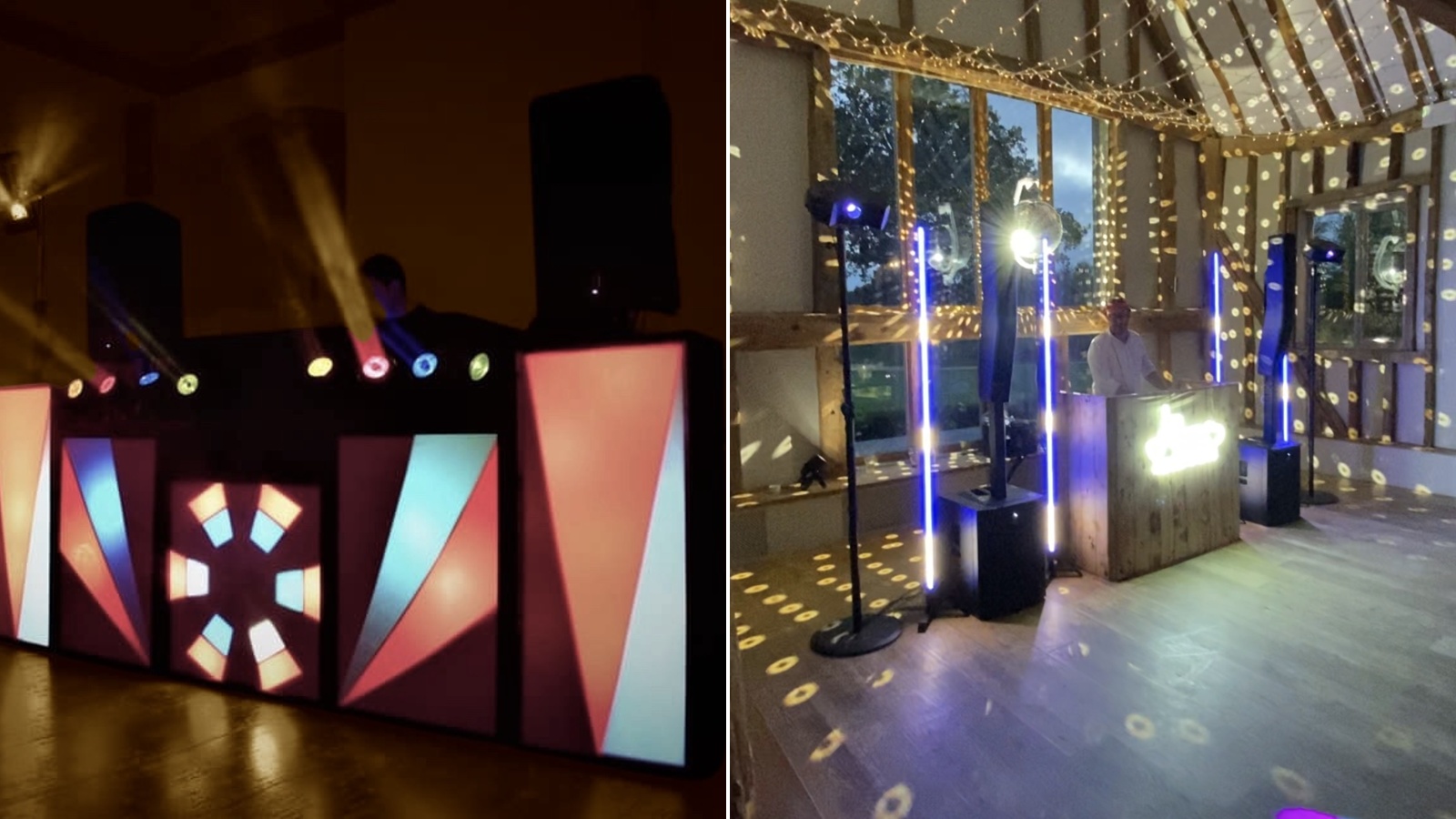
Fast-forward to today and the wedding DJ industry offers everything from architectural uplighting and illuminated LOVE letters to starlight dancefloors and dry ice machines that allow newlyweds to appear to be dancing on clouds.
Some of these additions can look absolutely spectacular, particularly in the right venue.
But somewhere amongst the smoke, flashing lights and oversized illuminated vowels, it’s worth remembering that the DJ’s principal responsibility is still to entertain the guests.
Who’s Choosing the Music?
This is probably one of the biggest changes I’ve witnessed.
In my early days, I was generally trusted to turn up and get on with it. Occasionally, I wasn’t even given the title of the first dance until I arrived at the reception.
Today’s couples quite understandably want far more input into the musical content of their wedding. Streaming services have given everybody access to an extraordinary catalogue of music, and compiling a playlist has never been easier.
I’m all for couples expressing their musical preferences. It’s their wedding, after all.
The trick is finding the balance between their personal favourites and the music that will encourage their guests onto the dancefloor. The two aren’t necessarily the same thing.
The Disappearing Record Box
When I started, the music I could play was largely determined by what I’d physically carried into the venue.
Today, I can bring a vast music library to a wedding without requiring the services of an osteopath on Monday morning.
Technology has transformed the way DJs work, but having access to thousands upon thousands of songs doesn’t necessarily make choosing the right one any easier.
That particular skill hasn’t changed at all.
A Wedding or a Film Production?
Wedding photography and videography have also evolved enormously. The traditional collection of formal photographs has been joined by cinematic wedding films, drones, photo booths and, of course, a room full of guests armed with smartphones.
Even the first dance can now involve carefully choreographed routines, elaborate lighting and a small army of people recording it from every conceivable angle.
It’s wonderful to have those memories captured, although I sometimes wonder whether we’re in danger of spending so much time recording the occasion that we forget to enjoy it.
Some Things Never Change
For all the technological advances, changing fashions and increasingly elaborate wedding receptions, the fundamental ingredients of a great evening remain remarkably simple.
Good music, good company and an atmosphere in which people feel comfortable enough to let their hair down.
I’ve entertained several generations of wedding guests, watched musical fashions come and go and played records at weddings that were released before the bride and groom were even born.
And I still get enormous satisfaction from seeing a dancefloor full of people having a genuinely good time.
If you’re planning your wedding reception and looking for an experienced, professional wedding DJ, I’d love to hear about your plans.
After a thousand weddings, I’m still looking forward to the next one.