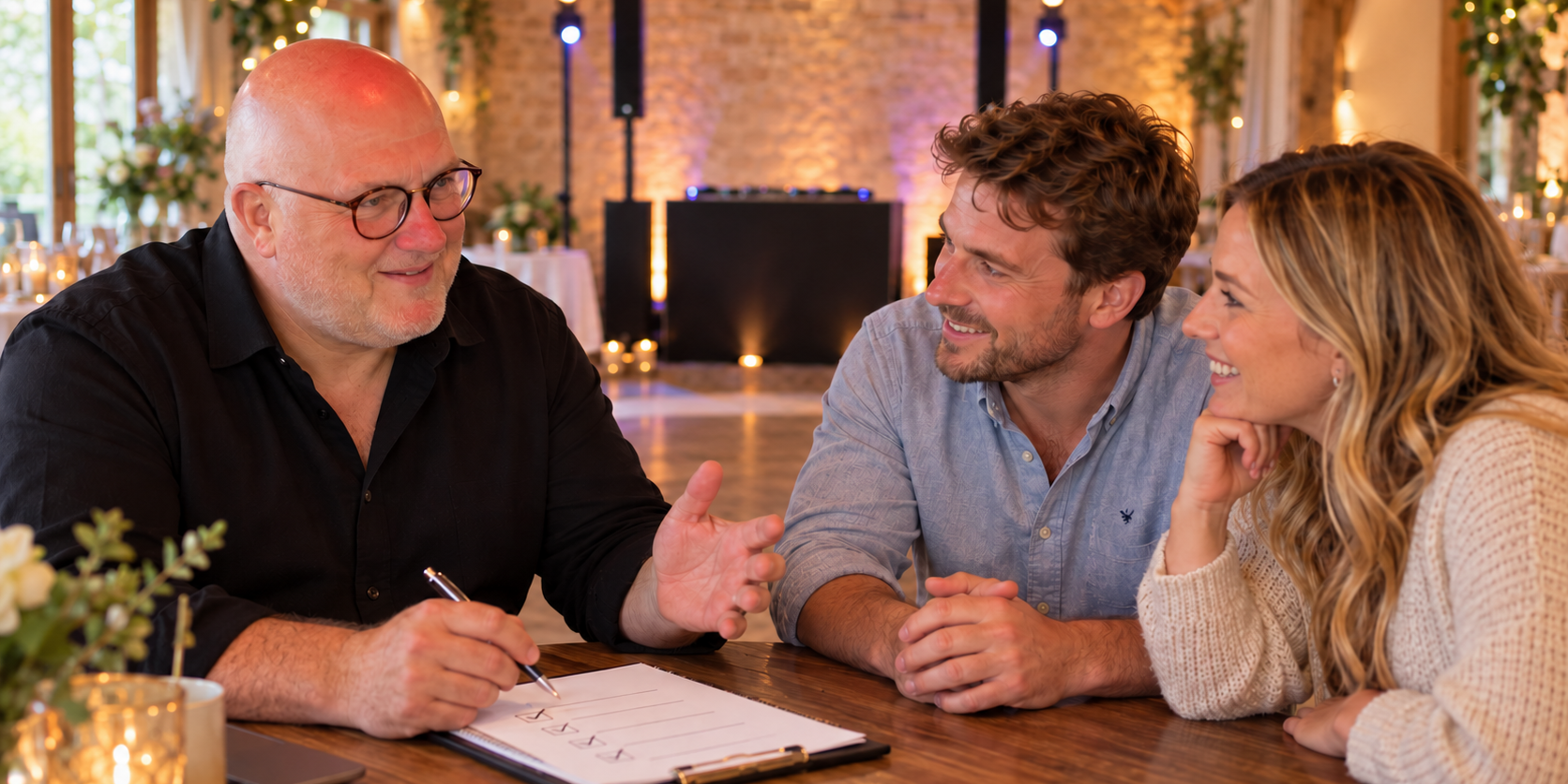
Your DJ – A Comprehensive Checklist For Success
Booking a DJ ought to be straightforward. Find someone who plays good music, agrees to turn up and doesn’t spend the evening shouting “MAKE SOME NOISE!” at people trying to eat their pudding.
Unfortunately, there’s rather more to it.
Whether you’re organising a wedding reception, birthday party or corporate event, here’s my checklist for choosing a professional DJ — and avoiding a few expensive surprises.
- Check who will actually turn up. Are you booking the person you’ve spoken to, or a company that will allocate someone later? Either arrangement can work, but you should know which you’re getting. The charming chap on the telephone may not be the chap introducing your first dance.
- Look for experience relevant to your event. A brilliant nightclub DJ isn’t automatically a brilliant wedding DJ. Weddings, mixed-age parties and corporate functions need different skills, music and levels of microphone involvement. Ask about events similar to yours.
- Read the reviews properly. Look for recent feedback mentioning reliability, communication, music and how the DJ handled the evening. “Great bloke!” is encouraging, but you’re booking entertainment, not choosing someone to help move a sofa.
- Ask to see photographs or videos of real events. These can give you an idea of presentation, atmosphere and the sort of functions they handle. A polished promotional video is useful; footage from an actual party helps you see beyond the sales pitch.
- Have a conversation before committing. Do they ask about your guests, venue and musical tastes? Do they listen? You don’t need to become lifelong friends, but you should feel comfortable putting your evening in their hands.
- Discuss the music — including what you hate. Favourite tracks, essential requests and a “please never play this” list are all useful. A good party DJ can work with your preferences while responding to the room. You shouldn’t need to programme all five hours yourself.
- Agree the microphone style. Some people want an enthusiastic host; others want clear announcements and very little else. Establish this beforehand, particularly if the thought of compulsory dance routines makes you consider cancelling the entire wedding.
- Check the equipment suits the venue. Sound should comfortably cover the room without overwhelming it. Lighting should suit the occasion. More equipment doesn’t automatically mean better entertainment, and a clean, tidy setup can look far smarter than a small branch of Blackpool Illuminations.
- Clarify the practical arrangements. Arrival time, access, parking, stairs, power, setup space and sound restrictions all matter. If you need everything installed before guests arrive, say so. Early setup may involve additional time and cost.
- Get the hours straight. Confirm when the music starts and finishes, whether breaks are planned and what happens if the timetable slips. Also check any charge for extending the evening — and whether the venue permits it. Uncle Dave requesting “one more” doesn’t override the finishing time.
- Ask about backup equipment and illness. What happens if a controller fails? What happens if the DJ cannot attend? Nobody can promise that nothing will ever go wrong, but “I’m sure it’ll be fine” isn’t much of a contingency plan.
- Check the venue’s paperwork requirements. Ask about public liability insurance and any electrical inspection or testing documents the venue requires. Equipment should be safely maintained, with cables managed sensibly. A PAT label is useful paperwork, but it won’t tell you whether someone can read a dancefloor.
- Get a written booking agreement. It should identify the supplier, date, venue, services, timings and price, together with payment and cancellation terms. Check what happens if either side cancels, and keep receipts. A deposit is normal; a vague promise in a disappearing message is less reassuring.

What Should a DJ Cost?
There isn’t one national tariff. Location, date, duration, experience and equipment all affect the price. These are broad guide figures, assuming you need the DJ to supply sound and lighting:
- Around £250: worth investigating carefully for a full evening event. It could be a reasonable local booking with a modest setup, but check experience, reviews, equipment and backup arrangements. Cheap doesn’t automatically mean bad; it does mean you should understand how the service is being delivered at that price.
- Around £500–£1,250: a useful starting budget for many established DJs providing evening entertainment. Private parties and wedding receptions can sit at different points within — or outside — this range. Compare the actual service rather than assuming everyone quoting £750 provides the same thing.
- Around £1,750 and upwards: a substantial investment, so ask what justifies it. All-day wedding hosting, several sound systems, specialist expertise, live performers or extensive production may explain the figure. A premium fee should come with a clear explanation of the value.
- Check the complete total. Travel, parking, VAT where applicable, early setup, extra hours and additional equipment should be clear before you book. Compare an evening-only quote with another evening-only quote, rather than an all-day package with a four-hour disco.
I’m always happy to discuss these points when you enquire about my DJ services. Tell me what you’re planning, and I’ll explain what I can provide and what it will cost.
Above all, book someone you trust. Someone who listens, communicates clearly, puts the details in writing and gives you confidence that they understand your evening. You’re putting an important celebration in their hands — you should feel comfortable with that decision long before the first song plays.